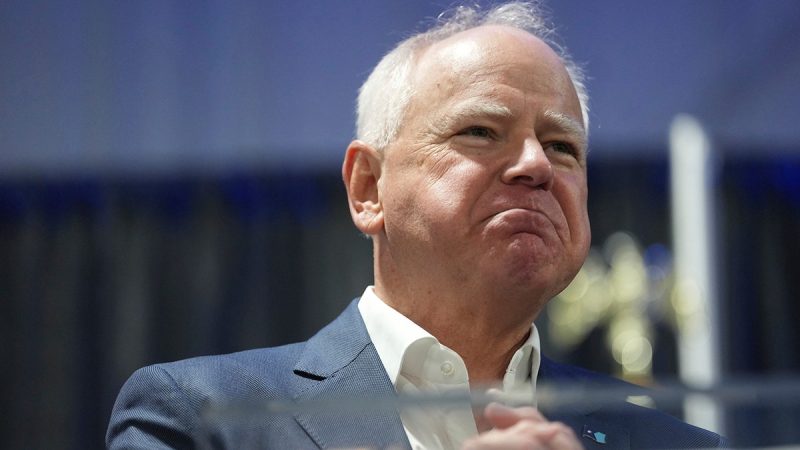
‘I hereby plead incompetence and stupidity.’
That’s probably the best defense that Minnesota Gov. Tim Walz can offer if he is criminally charged in the shocking multi-billion-dollar taxpayer ripoffs that grow larger by the day.
Given his earned reputation, his excuse of incompetence would be credible.
Nearly every social service program receiving federal dollars was fleeced by fraudsters right under Walz’s nose, including child nutrition, daycare, healthcare, housing, and autism aid. Most of the perpetrators were Somalians who comprise a powerful voting block that the governor treasures like gold.
Walz was repeatedly warned of the swindles as far back as 2019 when he first took office. Instead of stopping the scams and prosecuting the grifters, he indulged them by establishing a culture of permissible fraud.
The scandal has already claimed Walz’s political career, forcing him to abandon his bid for re-election. But if he reckoned that quitting would somehow shield him from legal culpability, he is mistaken. There is mounting evidence that Walz was willfully complicit, deliberately refusing to expose or pursue the monumental thefts and, instead, launching aggressive measures to scuttle any legal scrutiny and criminal consequence.
The governor’s own state workers at the Department of Human Services issued a blistering statement blaming him as 100% responsible. Witnesses say he retaliated against whistleblowers and schemed to discredit the well-documented fraud reports.
If true, Walz’s aberrant actions run dangerously close to criminal behavior involving cover-ups and obstruction.
Nine federal agencies, including the FBI, are now working to unravel the full breadth and depth of the colossal cons. The Department of Justice (DOJ) has sent scores of investigators and lawyers to Minnesota to prosecute the web of fraud and deceit.
They will inevitably weigh whether Walz should face criminal charges himself.
Possible Federal Charges
There are several federal statutes to consider. 18 USC 371 makes it a crime to conspire with others to defraud the government. At present, there is no known evidence that Walz directly participated in the scams themselves or accepted money.
However, if he plotted to cover up the fraud by impairing, obstructing or defeating efforts to bring the fraudsters to justice, the conspiracy statute is applicable. So, too, are the various obstruction of justice laws.
There is also 18 USC 2, the aiding and abetting statute where accomplices are treated the same as the main perpetrators. That law gave rise to the ‘willful blindness doctrine’ recognized by our courts.
An example is a businessman who intentionally ignores or turns a blind eye to his partner’s money laundering, resulting in charges against both. Similarly, a public official such as Walz can be indicted for deliberate inaction where he has a clear duty to act.
Finally, 18 USC 3 is relevant whenever concealment occurs. Whoever knows that a crime has been committed but ‘hinders apprehension, trial or punishment,’ is guilty of accessory after the fact. That bears a striking resemblance to what Walz is accused of doing.
All of this invites the question of the governor’s motive. If not money, how did he stand to benefit by suppressing the avalanche of fraud? That’s the easy part. Votes.
Walz, together with liberal elites and their media handmaidens, have long dismissed the rumors and reports of Somali-engineered fraud as ‘racist.’ Apparently, in Minnesota it is politically incorrect to enforce the law against immigrants from that particular East African country. It’s just not fashionable.